
Revamping the Streaming Experience
The dictation assistant listens to the consultation, produces an accurate Czech transcript, and drafts the structured medical record in the doctor's own template and style — then writes it straight into the practice software. In daily use at a cardiology practice since July 2026.
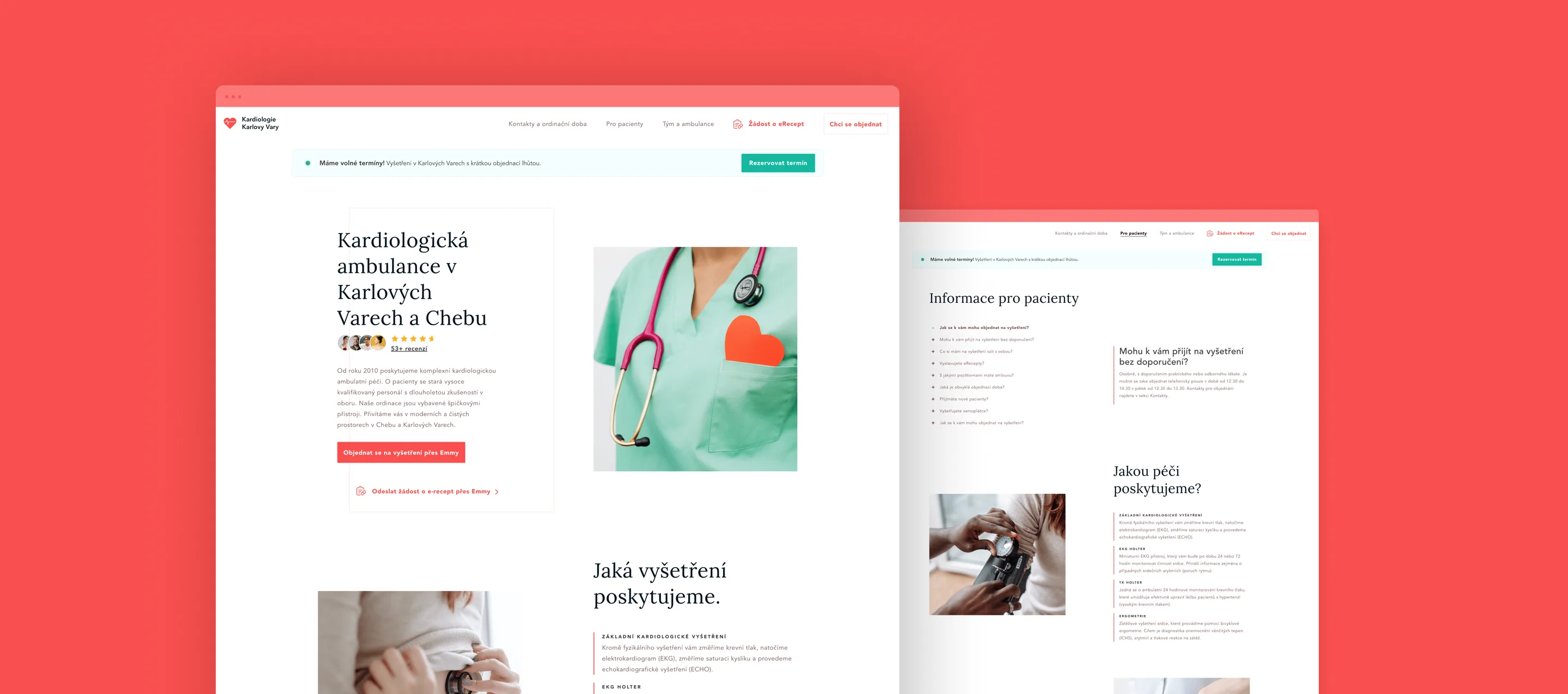
Kardiologie Karlovy Vary has provided outpatient cardiac care in Karlovy Vary and Cheb since 2010 — ECG, echocardiography, 24–72h Holter monitoring, ergometry. Founded and led by MUDr. Berenika Podzemská, the practice is known for short waiting times and a human approach. After every patient, the doctor writes a structured record (a "dekurz"): fourteen sections, established abbreviations, her own style. Most of the text carries over from the previous visit; only what happened today changes. The transcription used to happen at the end of the day — when details are remembered worst.
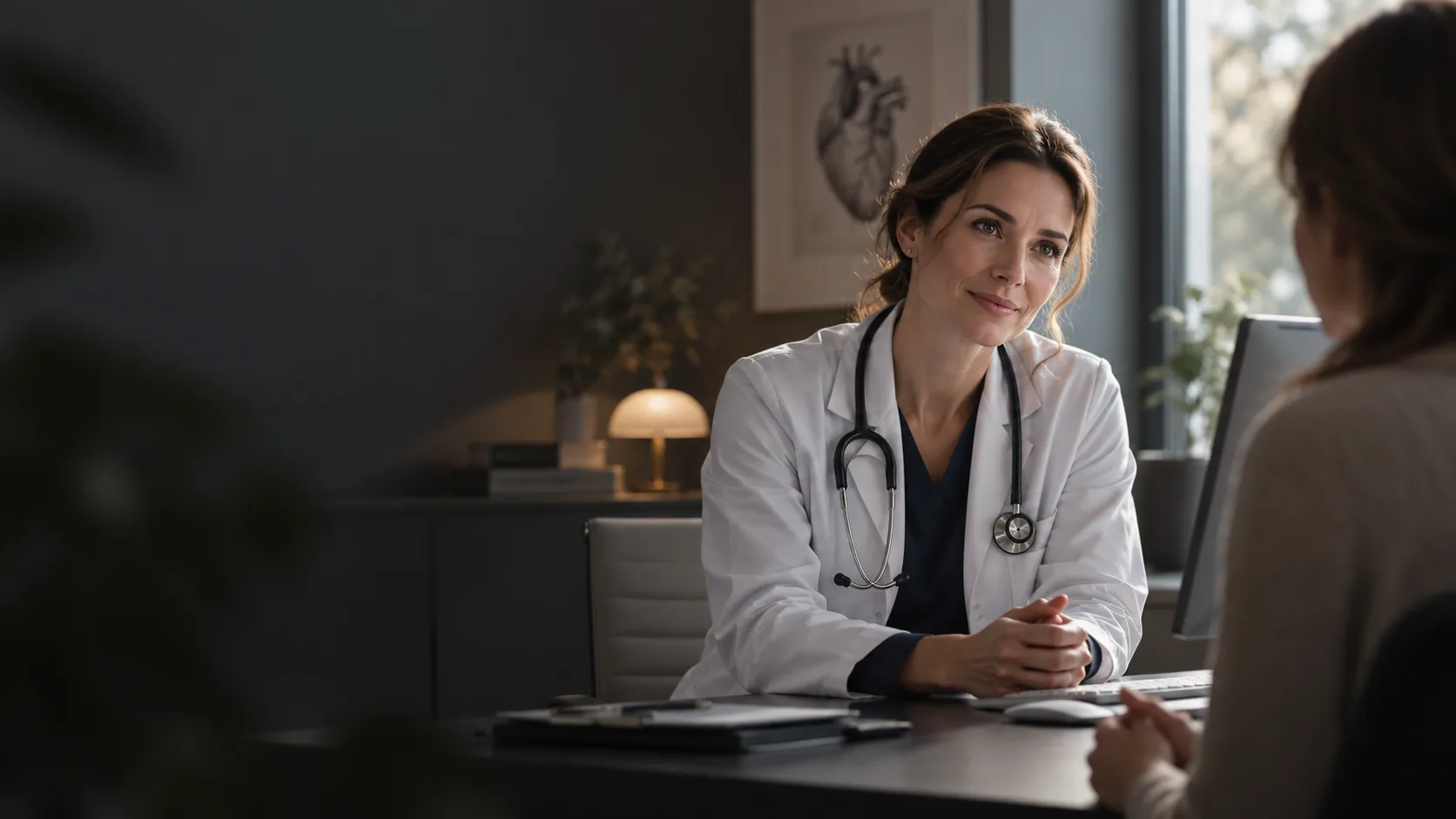
The consultation flows like a conversation.
Matters for follow-up care and for the insurer.
Records come out readable and precise.
Focus on medicine, not on writing.
Built for healthcare providers, GDPR-compliant.
01 Recording — the doctor starts recording and talks with the patient as usual. The recording saves continuously: a closed browser or dead laptop loses nothing. Recordings made elsewhere can be uploaded as files.
02 Transcript — the conversation is transcribed in Czech; the transcript stays available in the app for reading and correcting.
03 Previous visit — the app finds the last real examination in the patient's chart and builds on it, medication list included. Standalone prescription and billing records are skipped — there is no examination note in them.
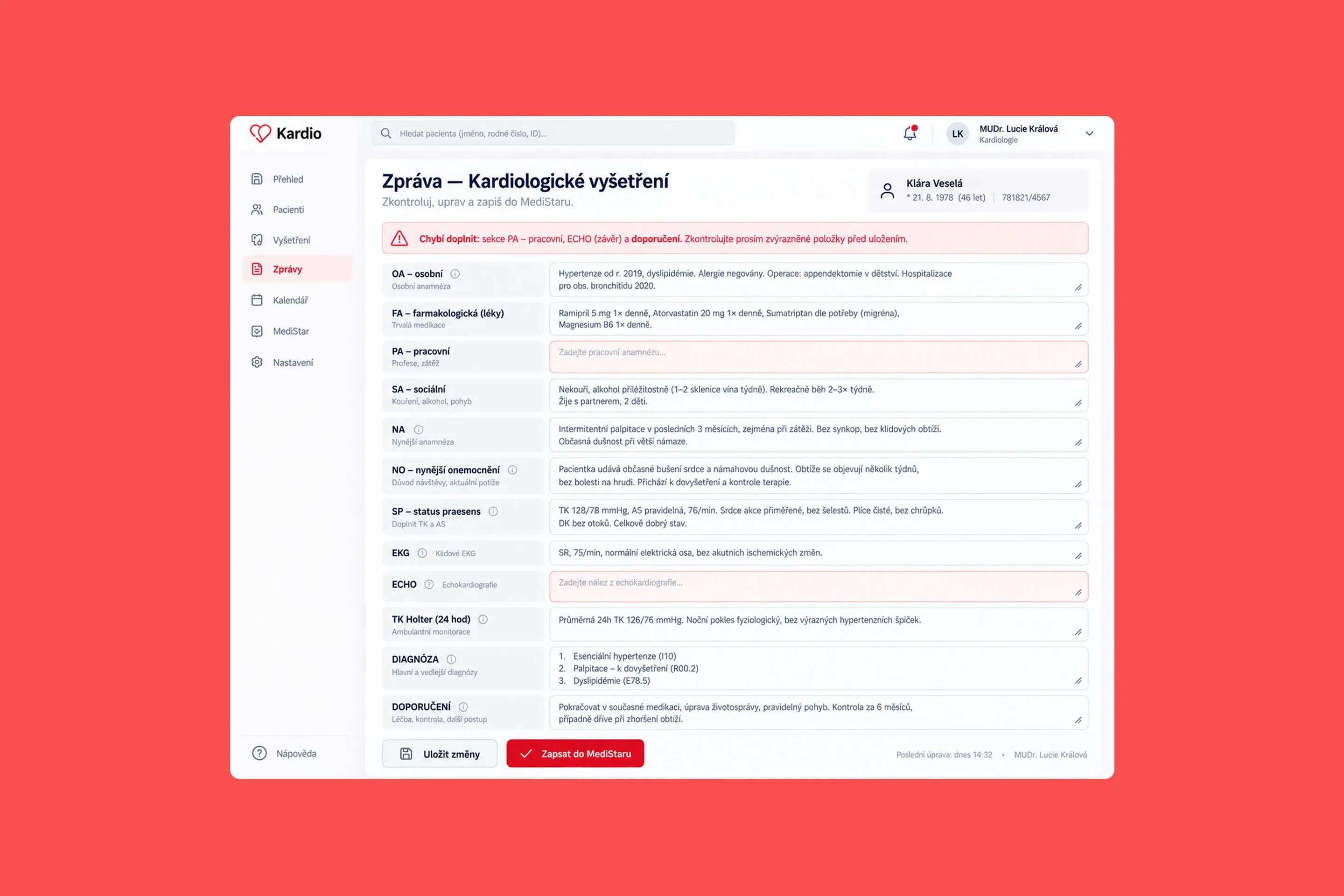
04 Draft record — the note is drafted in the clinic's template: same section order, same abbreviations the doctor is used to. The draft includes a list of values that were not said out loud and still need filling in.
05 Approve & write — the doctor reviews, edits, and with one button the record is written straight into the patient's chart in the practice software. No copy-pasting between two windows.
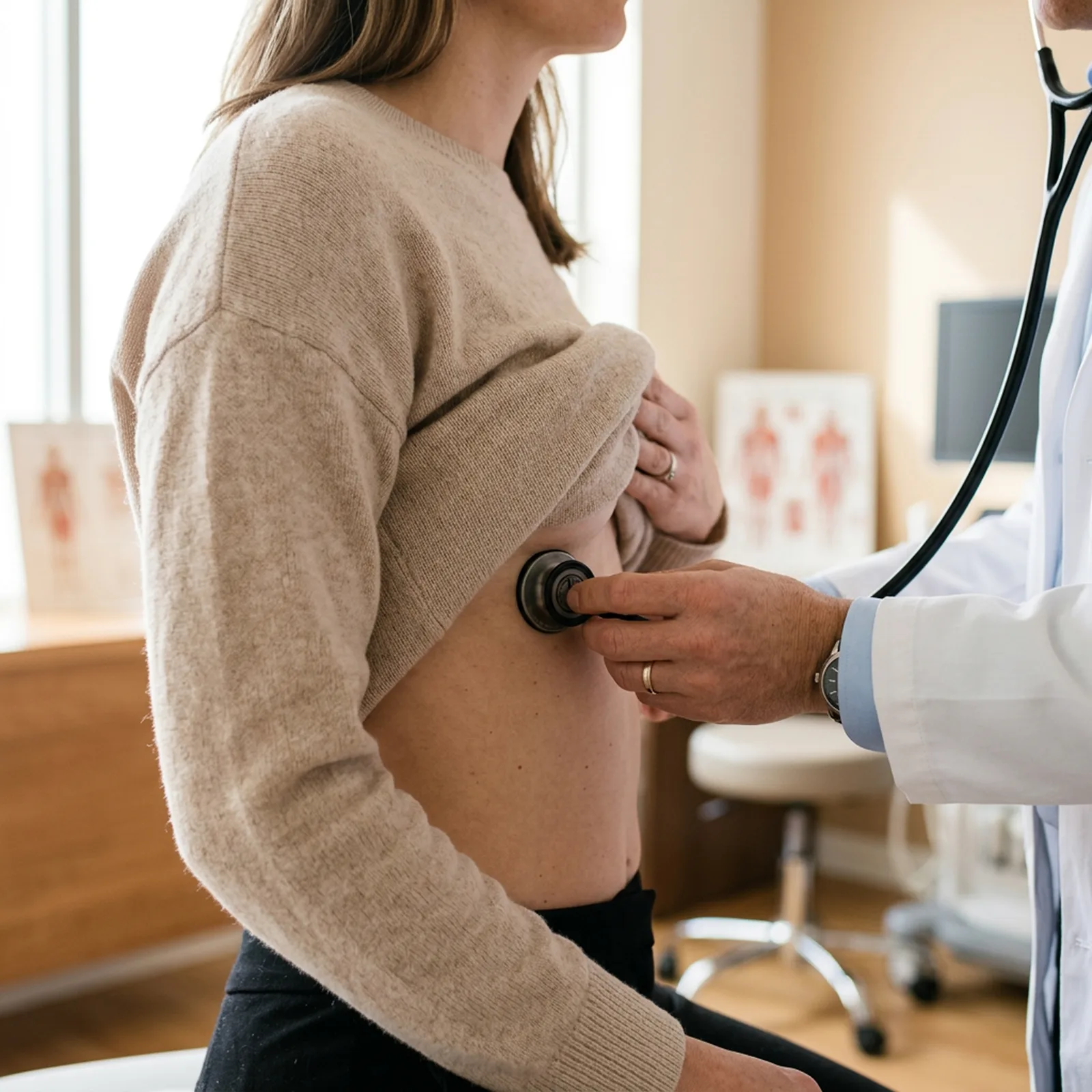
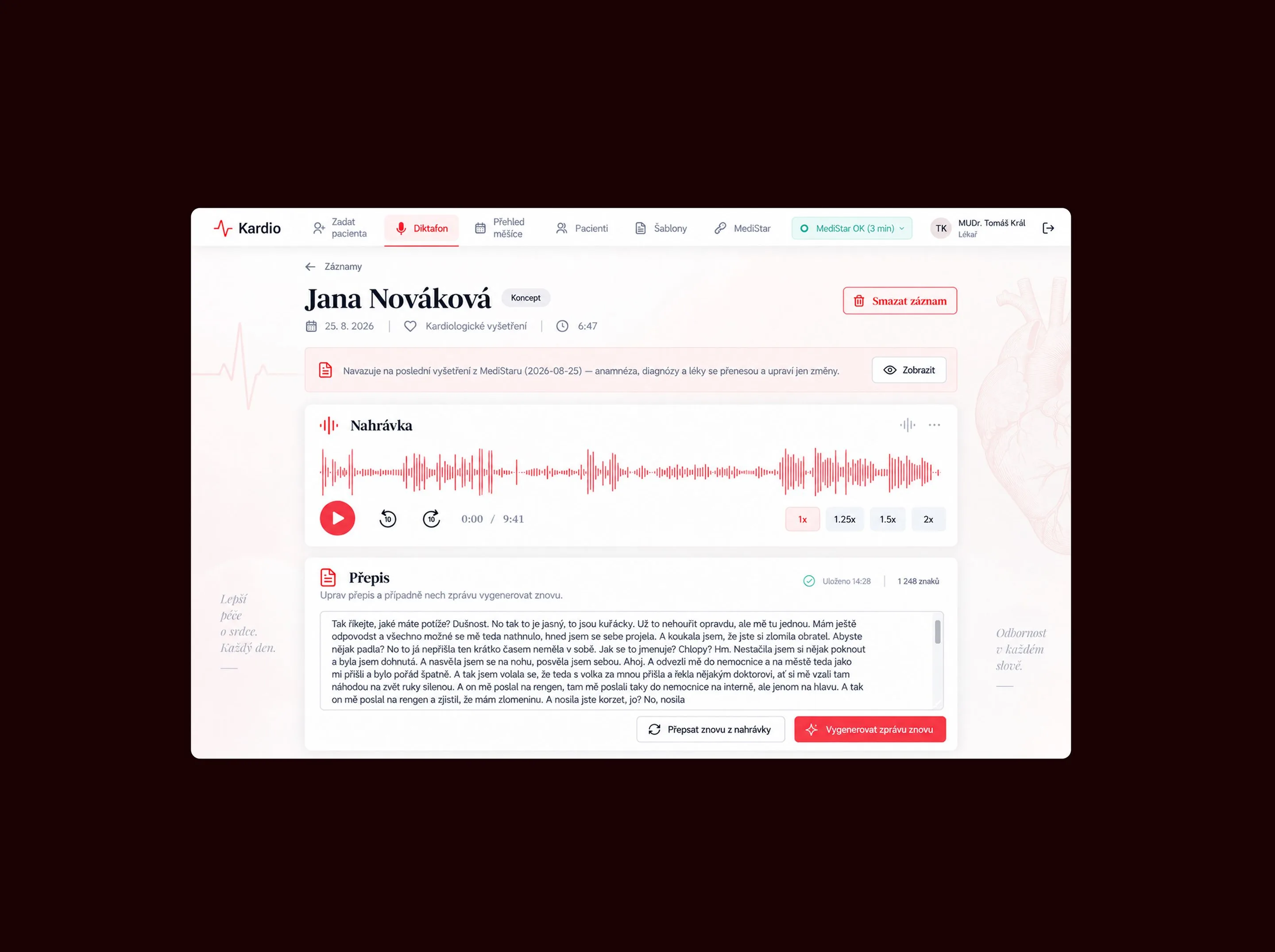
It invents nothing. A value that wasn't said stays empty and appears on the fill-in list. For a doctor, that's the only acceptable behaviour.
Medication names get mangled in transcripts. The app writes the closest phonetic match and flags it with a question mark for the doctor to verify. It never substitutes a different drug.
History carries over; findings are written fresh. The anamnesis builds on the last report and changes only with today. The objective finding always starts from a normal finding and overwrites what the doctor dictated.
What the patient says and what the doctor sees are two different things. If the patient reports swelling and the examination shows none, the claim belongs in the history and the finding stays negative. The app flags the contradiction itself.
The template belongs to the practice. Section wording, normal findings and style rules are editable directly in the app — no programmer needed.
We recorded three real visits in the practice and compared the output with the records the doctor wrote by hand the same day. The generated notes matched her manual version — style and abbreviations included.
For one patient, the generated record was more accurate than the hand-written one: the manual note still carried a blood pressure value copied from December 2024, while the app used the value measured at that day's examination.
For another patient, the app flagged a medication discrepancy without being asked. The test also caught one bug on our side — which we fixed.
IN PRODUCTION — at the practice since July 2026.
INTEGRATION — reads the previous visit and writes new records directly into the patient chart in the practice software.
TEMPLATE — fourteen sections, maintained by the clinic itself.
SCOPE — documentation; Holter billing runs as a separate part of the app.
Ahead of a full rollout, data-processing agreements will be put in place, and multi-doctor support — attributing each record to its author — is the next step.
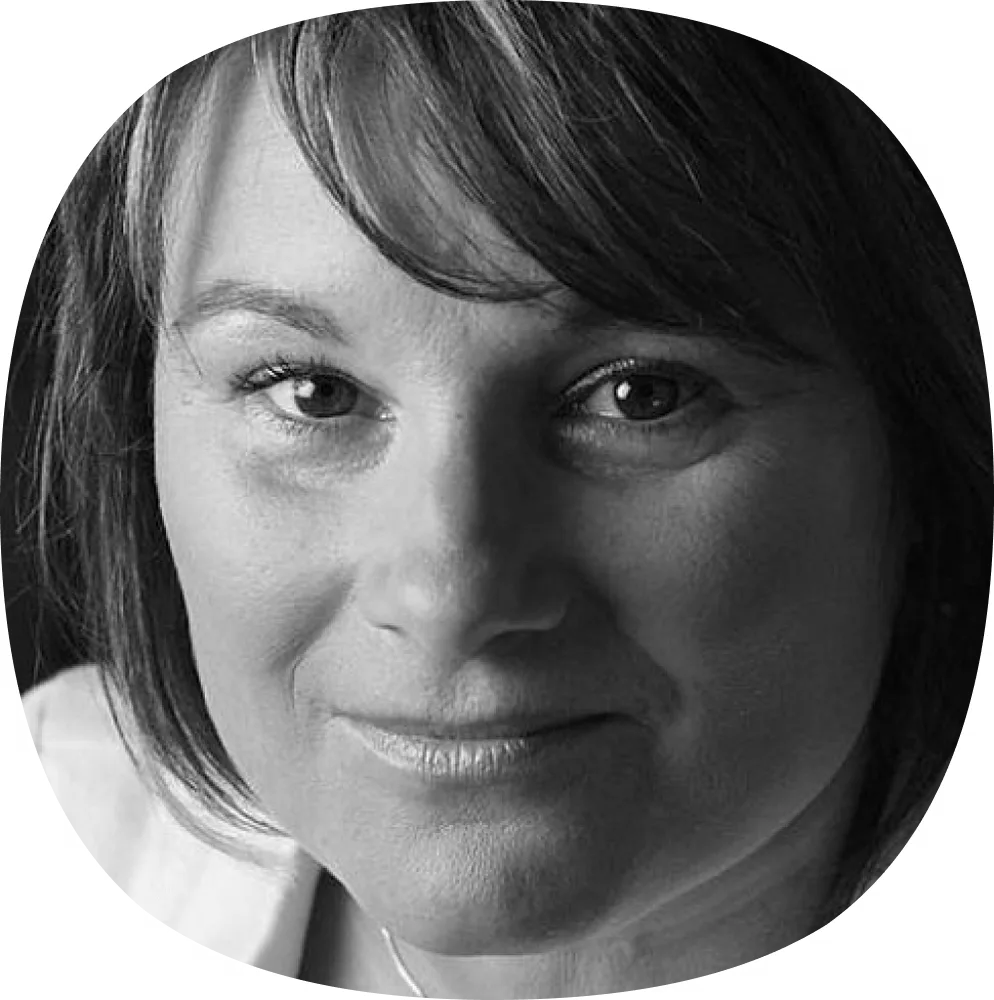
Implementace přepisu mluveného slova od Cleevia přímo do PC s možností jednoduchého přesunu do ambulantního SW je naprosto skvělá. Šetří čas lékaře a zlepšením přímého kontaktu s pacientem ‚z očí do očí' zvyšuje úroveň komunikace a prohlubuje vzájemnou důvěru.
Cleevio's speech-to-text, written straight into the practice software, is simply excellent. It saves the doctor's time and, through direct eye-to-eye contact with the patient, raises the quality of communication and deepens mutual trust.
No patient data appears on this page. All examples are fictional.




We've pre-loaded the context.
Ask what we're good at — and what we're not.
Opens a new chat, context already written.
Our AI sales agent knows the work cold — what we build, how a POC runs, what it'd cost for your case. Ask her now; she'll follow up by email to get you started.
Privacy preferences